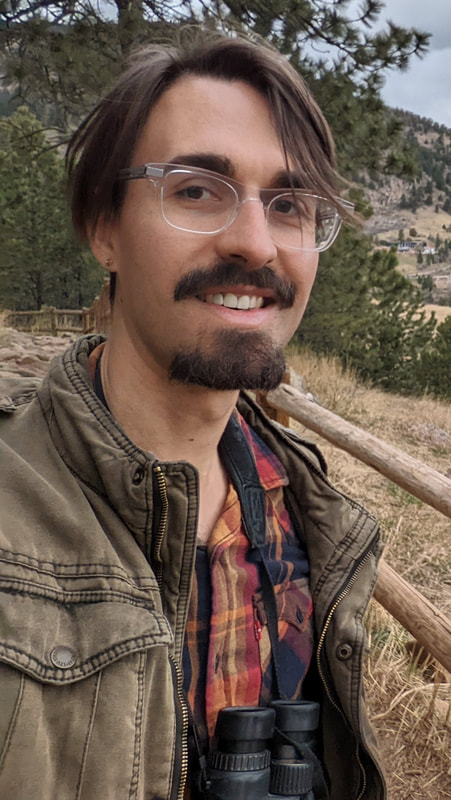
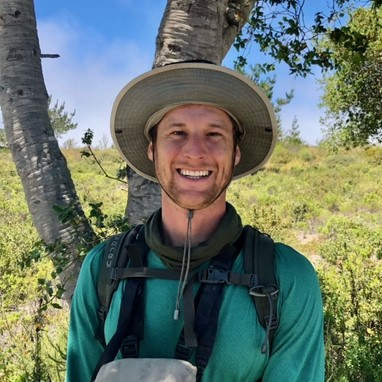
By SFBBO Director of Plover and Tern Science Maddy Schwarz
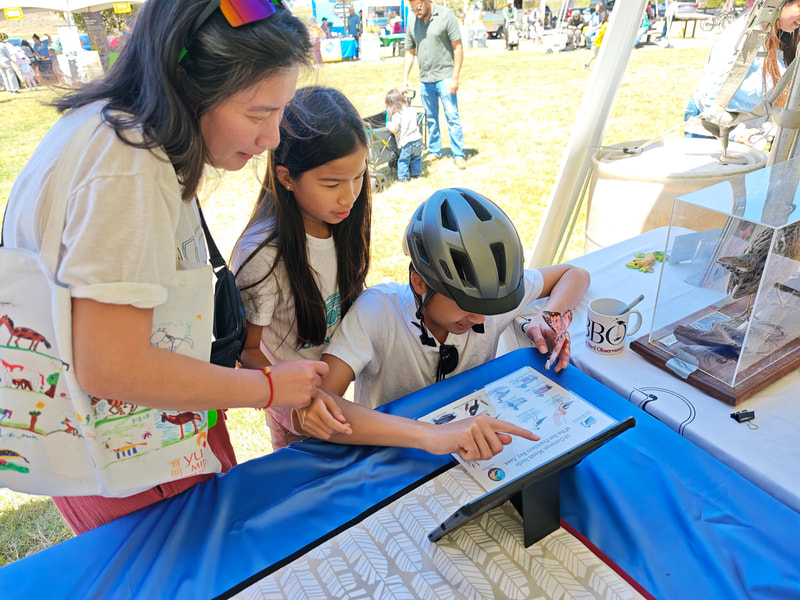
This month, SFBBO staff went on a tour of the Marine Mammal Center in Sausalito! This exciting and informative outing was made possible by a collaboration with the Center that SFBBO participated in last fall.
The Marine Mammal Center runs an environmental education program, Stewardship Saturday, where high school students from around the Bay Area sign up to spend a Saturday learning about a marine ecosystem and then take action to help that ecosystem.
This free program features rotating events along the Center’s 600-mile range exploring the science of the Center, learning more about ocean conservation, and connecting with local conservation communities.
In March 2025, the Center reached out to SFBBO to ask us to partner with them to educate youth about birds and conservation science. Together we developed a Stewardship Saturday curriculum that teaches students about Snowy Plovers, Least Terns, and other migratory seabirds. On Oct. 25 last year kids from several different high schools helped SFBBO manage a plover and tern breeding pond at Eden Landing Ecological Reserve in Hayward by collecting chick shelters and putting them in storage for the winter.
After a successful event, the Marine Mammal Center offered SFBBO a tour of their facilities, which we gratefully accepted! To learn more about the Marine Mammal Center’s high school education program, please visit their website. To get involved in SFBBO’s volunteer and outreach programs, please visit our events page.
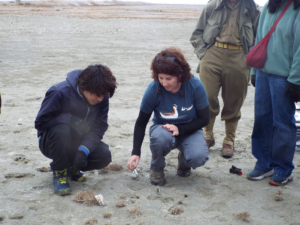
The above photo of SFBBO Director of Plover and Tern Science Maddy Schwarz and a student participant was taken by Marine Mammal Center Marine Science Educator Kyra Kawamoto.
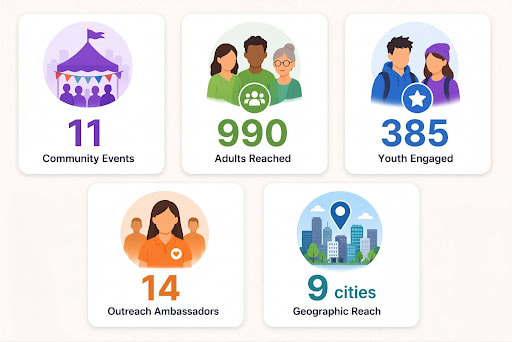
Our SFBBO community events team of staff, board members, and volunteers has been busy and productive so far this year! Our presence at eleven separate outreach events across the San Francisco Bay Area allowed us to engage deeply with a diverse range of community members. This collective effort sparked meaningful connections across various demographics, and the infographic below provides a snapshot of our shared accomplishments. We finished off the spring effort with two popular events last month.
Wild & Scenic Film Festival
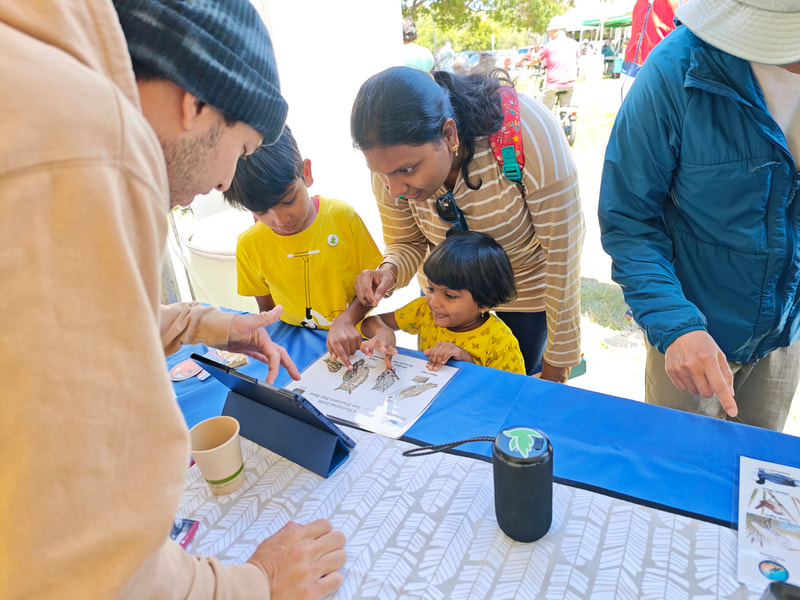
This was our fourth year straight tabling at the Scenic and Wild Film festival. The energy that the audience brings to this event is palpable and everyone attending is really looking to make a difference in their communities. So we try our best to find programs that they can contribute within SFBBO based on their interests. It was a busy event, with a high volume of visitors packed into one intense, 60-minute window. We successfully debuted “Birdle: Marsh Madness,” ran gameplay sessions for participants, and onboarded two new tabling volunteers.
Bird and Butterfly Festival
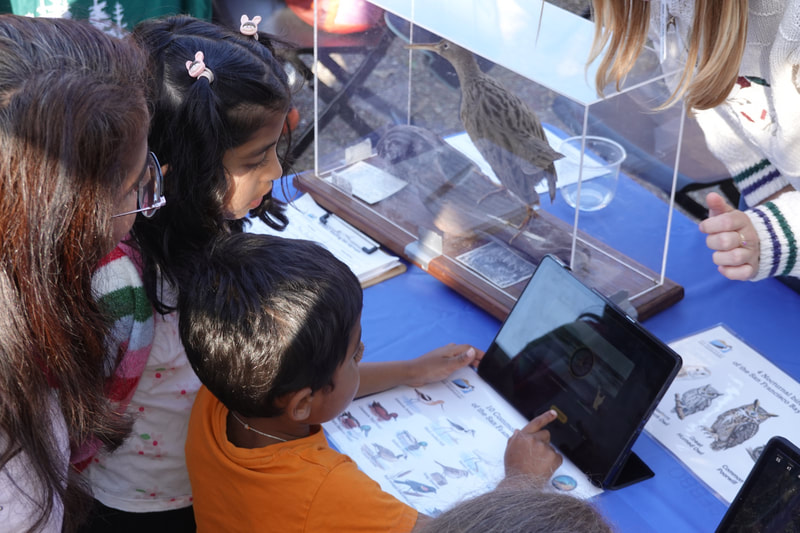
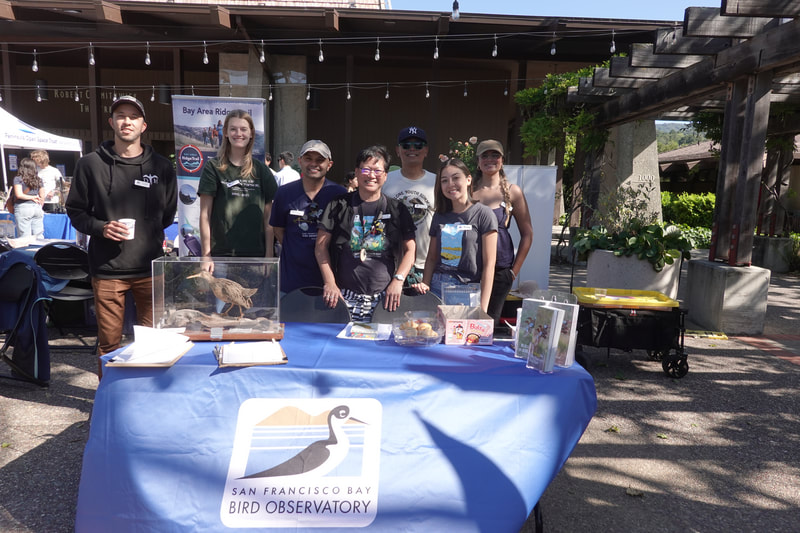
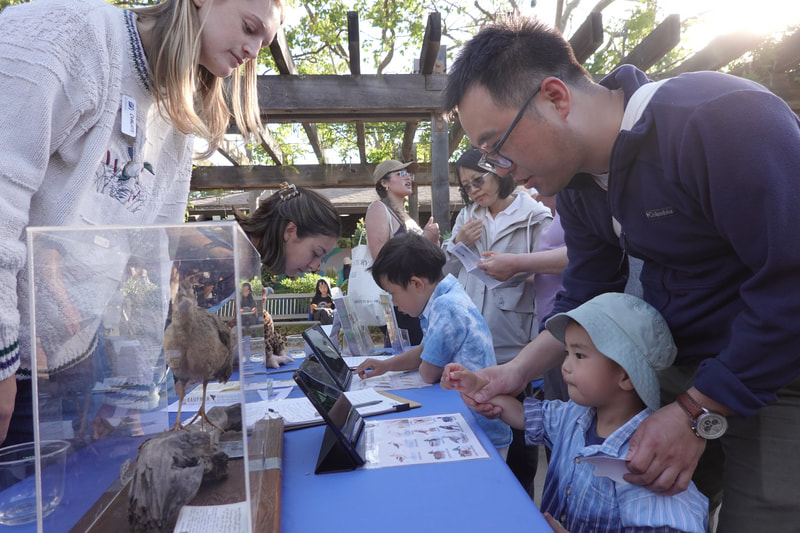
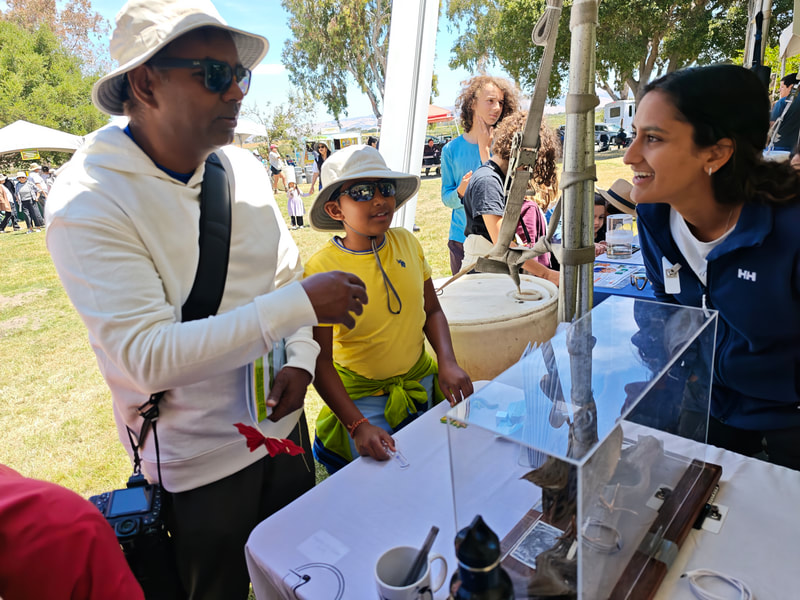
The event saw a high volume of families, particularly those with children under age ten. Our booth offered an interactive experience where participants delved into “Birdle: After Dark” and “Birdle: Marsh Madness” to discover the secrets of local nocturnal and marsh-dwelling avian species. Throughout the day, we fielded numerous inquiries from enthusiastic visitors eager to find the best local spots for observing birds like the Ridgway’s Rail and the Cinnamon Teal.
These hands-on activities, ranging from matching beak shapes to specific diets to identifying bird calls, create an instant bond between visitors and the natural world. This spark of inspiration allows the public to uncover the wonders of our local avian populations. From there, the experience evolves into a meaningful educational conversation about the importance of native plants and the critical restoration work conducted by SFBBO. We explain how revitalizing tidal marshes provides essential sanctuary for species at risk, such as the Salt Marsh Harvest Mouse and the endangered Ridgway’s Rail. By the time they leave, our guests have a defined roadmap for stewardship—whether through active volunteering to enhance local habitats or by gaining a profound new respect for our ongoing conservation missions.
The success of our tabling efforts rests entirely on the tireless commitment and passion shown by our staff, board, and outreach team. I want to express my sincere appreciation for their invaluable contributions, as their support is the heartbeat that sustains our community engagement.
By SFBBO Director of Regional Strategies Dr. Nathan Van Schmidt
SFBBO is refocusing three of its longstanding community science-driven Waterbirds programs—our phalarope surveys and our California Gull walkthroughs—as well as our gull abatement research under a new umbrella: Saline Lake Connections. This is in recognition of the significant momentum behind the pressing need to understand the unique saline lake ecosystem and their connections to San Francisco Bay in order to preserve both.
When SFBBO was founded in 1981, a central goal of the organization was to study how waterbird species were using the salt ponds of South San Francisco Bay. Those founding researchers had no idea that these salt ponds would become the site of the largest restoration effort on the U.S. Pacific Coast, the South Bay Salt Pond Restoration Project. But they did immediately see the value of the hypersaline ecosystem for many waterbirds, including specialist species that normally only occurring in saline lakes like Mono Lake and the Great Salt Lake. These include Wilson’s and Red-necked Phalaropes, California and Bonaparte’s Gulls, and Eared Grebes. California Gulls breed locally, while the others participate in a hemispheric migratory network that connects saline lakes from Canada to Argentina.
That system of saline lakes is in crisis. Nearly all of these ecosystems in an extremely fragile due to decades of unsustainable water diversions. As a result, some like Lake Abert are drying out and functionally collapsing as an ecosystem when hit by drought. The salt ponds of San Francisco Bay may act as refuge in such years, though the influxes of avian refugees can significantly impact our own ecosystems.
As a result of this crisis, Dr. Nathan Van Schmidt, SFBBO’s Director of Regional Strategies, joined other leading phalarope researchers in signing scientific petition to list the Wilson’s Phalarope as threatened under the Endangered Species Act. This was driven in part by documented 98% declines of this species locally. This winter, this action produced results: the federal government has officially agreed that a review of the species status was warranted and begun the review process. Agency heads and scientists across the Western U.S. are now forming a Core Workgroup to help conserve and manage populations of this unique shorebird.
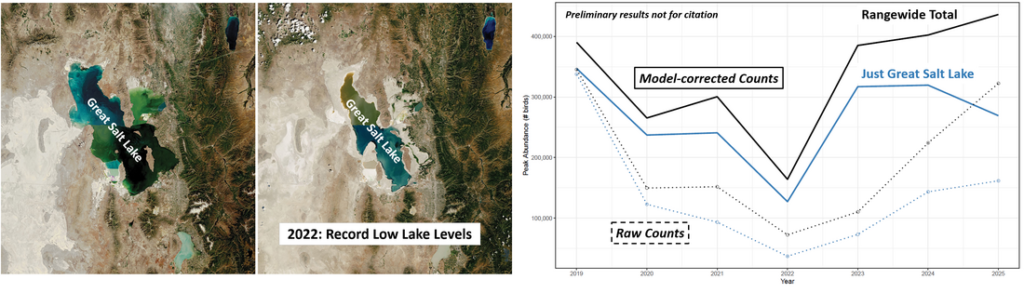
To guide these conservation efforts, Dr. Van Schmidt just completed the first-ever rangewide model of phalarope migratory dynamics. Because the two species can be difficult to identify at a distance, estimating their relative population required developing a complex novel statistical model of their joint abundance and identification rates, which may in the future help improve population estimates for many other tricky species like yellowlegs. The model, which is still in peer review, uncovered more clearly than ever before what phalarope researchers had feared: the 2022 drought that brought Great Salt Lake to the brink of collapse corresponded with a huge decline in the global population of Wilson’s Phalarope. Future work aims to integrate information from partner researchers in South America, who Nathan met with in the 2024 International Workgroup meeting in Argentina, to create a full global model.
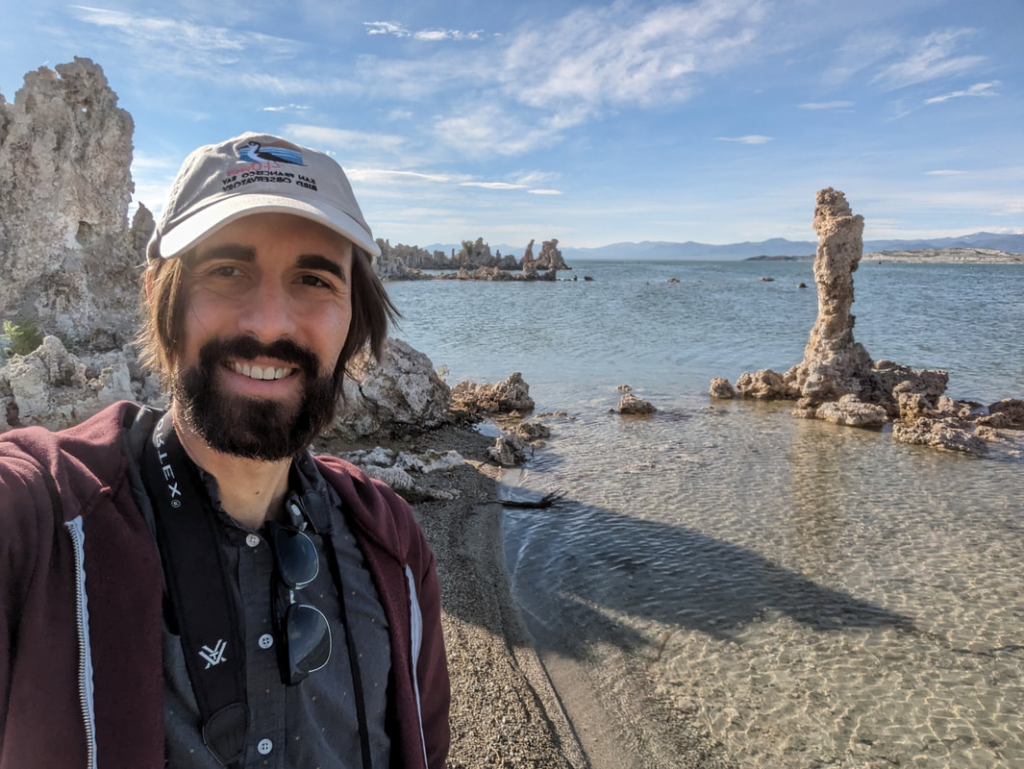
Great Salt Lake isn’t the only saline lake in trouble. Chronic low water levels persist at Mono Lake despite it being the only North American saline lake with a legal mandate to retain enough water for its ecosystem to function, which was set by the State Water Board in 1994. A new modelling report has confirmed that the ongoing lack of recovery is primarily due to unsustainable water diversions to Los Angeles. These conditions led to record-low breeding success and population declines of California Gulls in recent years, and a historic explosive growth of California Gulls displaced from Mono Lake to the Bay Area, which in turn has increased predation on sensitive breeding species like Snowy Plovers. This creates a thorny conservation challenge: if California Gulls are declining elsewhere, should they be re-listed by the state as a Species of Conservation Concern even if they are problematic for other sensitive waterbirds in San Francisco? We are keeping a close tabs on this situation with our gull abatement monitoring, which last year we expanded from just South Bay to also cover Suisun Marsh in North Bay and via a partnership with Scott Stevens lab in San Jose State University to band and GPS-track gulls to see where they are foraging. We are also watching how populations of California Gulls may be changing in response to the dire conditions at Mono Lake with our walkthrough community science surveys, which are taking place in early May.
Last month, Nathan wrote a letter to the State Water Board detailing these concerning trends and commenting on the results new model. As a result of these comments and those of our partner researchers in the Mono Lake Committee and Oikonos, the State Water Board is convening a public workshop on bird populations in early June and invited Nathan to present SFBBO’s findings at it. This hearing is expected to be one key step in reassessing whether Mono Lake’s water diversions are to be adjusted to meet sustainability needs for this critical ecosystem, potentially by the end of next year.
Given the complex connections we are seeing between what is happening here and across the intermountain West, and the significant management effort now underway to figure out how to save these unique ecosystems, SFBBO is rethinking how we are managing these long-term monitoring projects. Our new Saline Lakes Connections approach emphasizes the need to build on the foundation of our phalarope, gull walkthrough, and gull abatement projects with several new initiatives:
1) Work directly with managers, agencies, and other researchers across the Great Basin to provide technical expertise in how to manage phalarope and other saline specialist waterbird populations;
1) Partner with other researchers to extend our field research efforts beyond the confines of South San Francisco Bay, including developing new monitoring efforts at saline lakes across the West;
3) Integrate models of water supply and demand into our understanding of saline lake dynamics (as Nathan has done for California’s Central Coast) to better understand and predict how human water use drives the declines and recovery of waterbird populations.
These ambitious efforts will take time to come to fruition, but SFBBO is committed to tackling the challenge of conserving these unique and underappreciated ecosystems.
“What are the best spots to find beautiful birds around the Bay Area?” If you’ve ever wondered this, you’ll be excited to hear about our new social media series: Bay Area Birding Hotspots.
I’ve been a lifelong lover of nature, but I’m a relatively new birder. Exploring new places and getting to know their local bird communities has quickly become one of my favorite ways to connect with the environment. I’m also fairly new to photography, and I have so much admiration for people with the patience, skill, and timing to capture birds so beautifully. Some of my most meaningful birding experiences have come from interactions with birders, photographers, and conservationists who point out something I might have missed, or recommend a favorite trail. And as I’ve learned more, I’ve found a lot of joy in passing that spark along by sharing my binoculars with a curious passerby to show them what I’m so intently observing.
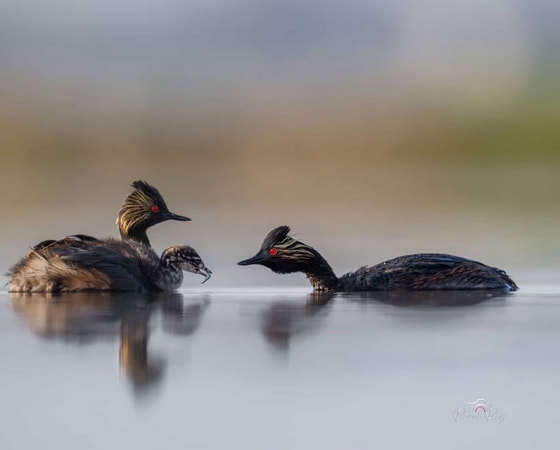
Eared Grebes by Rahul Guha Ray
The Birding Hotspots series grew out of these experiences. As a digital creator for SFBBO, I hope to introduce people at all stages of their birding journey to some of the Bay Area’s great local spots, along with a few tips on what to look for at each one. I’m also especially excited to highlight the work of local wildlife photographers and community members by sharing their images with a wider audience.
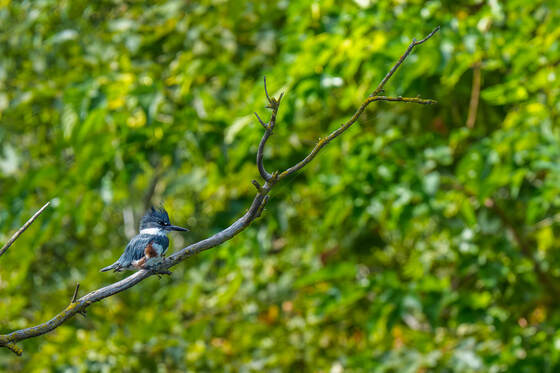
Belted Kingfisher by Amanda Newlove
So far, the series has featured Vasona Reservoir, Shoreline Park, Seal Point Park, and Palo Alto Baylands. We would love to continue expanding to hotspots across the region—especially in the East Bay, North Bay, and San Francisco—and to collaborate with photographers who know and love these places. If you’re interested in sharing photos and tips from your favorite spot, please email us at outreach@sfbbo.org or send us a message on Facebook or Instagram.
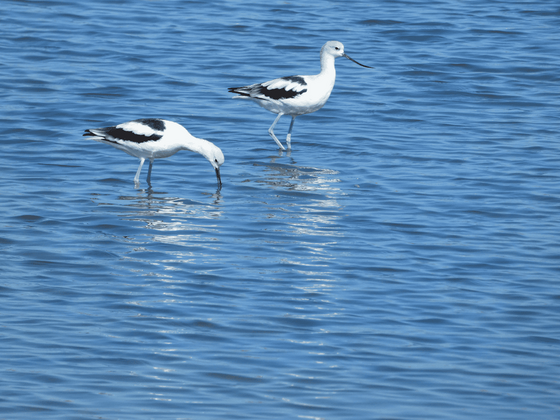
American Avocets by Camden Bac
I’ve already learned so much from our social media community (including a few well-earned, cheeky corrections), and I’m grateful for the thoughtful comments, feedback, and enthusiasm people have shared. If you haven’t yet, we hope you’ll explore the series, spend some time outside, and maybe even discover a new favorite place to watch birds!
For over four decades, SFBBO’s Colonial Waterbird Program has sent trained volunteers into the field each spring and summer to watch over the Bay Area’s nesting herons, egrets, cormorants, terns, and gulls. Our annual monitoring report has long been a cornerstone of that effort, combining all the data gathered by our hard-working volunteers on how these majestic birds are faring across the region. In 2020, we undertook a major overhaul of our monitoring protocols to streamline the monitoring protocol. That broke all our old analysis code, and the report went kaput. But that was well worth it for the on-the-ground tradeoff: new volunteers could be onboarded more easily, and more people than ever could participate in avian science! And did it ever grow substantially. In 2024, Audubon Canyon Ranch ended their long-running sister monitoring program in the North Bay, and we were able to step in and take the 44 colonies in Marin, Sonoma, Napa, and northern Contra Costa counties under our wing (pardon the pun). That scientific rescue effort required another two years of building relationships, training volunteers, and figuring out logistics before we were ready to publish again. But I’m thrilled to say: the report is back!
SFBBO’s Habitats Team is wrapping up its initial planting of the roughly 2 miles of new levee just constructed at Don Edwards NWR in Alviso. The new levee, which is actually an old levee that was raised about 9 vertical feet, comprises Reaches 1-3 of the South San Francisco Bay Shoreline Project’s Flood Risk Management levee. This levee is designed to protect low-lying South Bay shoreline communities like Alviso from the increasing flood risk brought on by sea level rise. Once additional reaches of the levee are complete, it will also help facilitate the restoration of thousands of acres of former salt ponds to tidal marsh.
‘Twas the day before New Year’s and all through the house, biologists were typing and rereading paragraphs aloud…
It’s a cruel fact that projects are often due on the last day of the month, meaning that if it was a year-long project, it’s due on the last day of the year. Therefore, before you head out to your New Year’s Eve festivities, you must first cobble together whatever brainpower survived the onslaught of holiday cookies and poor sleep decisions during the week between Christmas and New Year’s and submit! that! final! report! While generally not anyone’s preferred New Year’s Eve activity, if you’re lucky, the project you’re finishing is interesting and worthwhile. The kind of project that makes you reflect on what you accomplished during the year, appreciate how much you learned, who you worked with, and how your efforts illuminated a new corner of the world you hadn’t considered before.
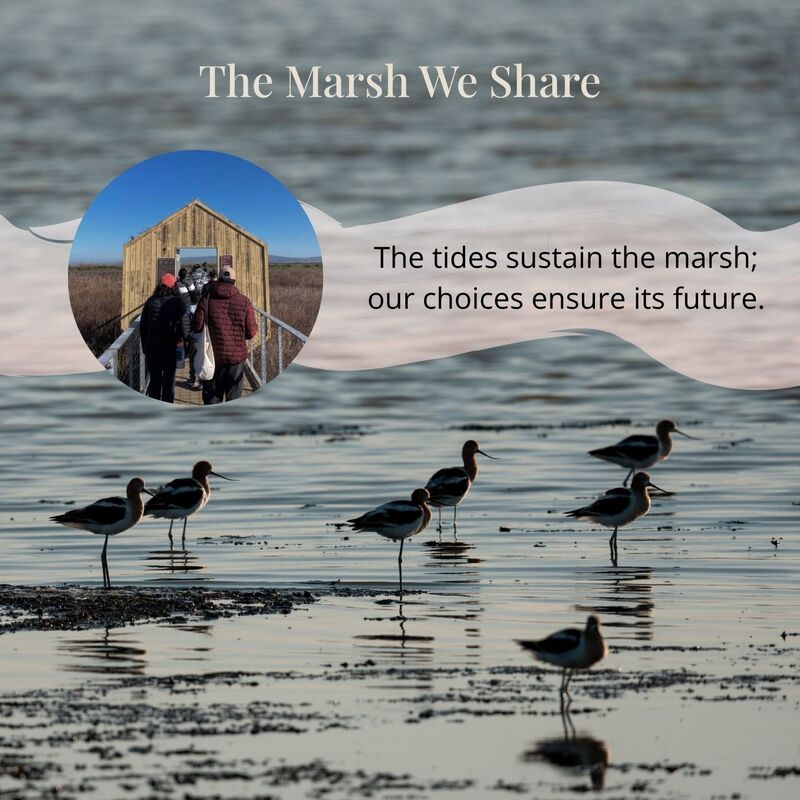
As part of our ongoing work to connect people with the Bay’s natural landscapes, we’re sharing a series that explores the story of San Francisco Bay’s tidal marshes — their history, science, and the community efforts that keep them thriving.
San Francisco Bay’s tidal marshes do more than shape the shoreline. They filter water, buffer nearby communities from storms, and store carbon that would otherwise contribute to a warming climate. These wetlands are also home to wildlife found nowhere else, including species specially adapted to life in the tides.
As part of our ongoing work to connect people with the Bay’s natural landscapes, we’re sharing a series that explores the story of San Francisco Bay’s tidal marshes — their history, science, and the community efforts that keep them thriving.
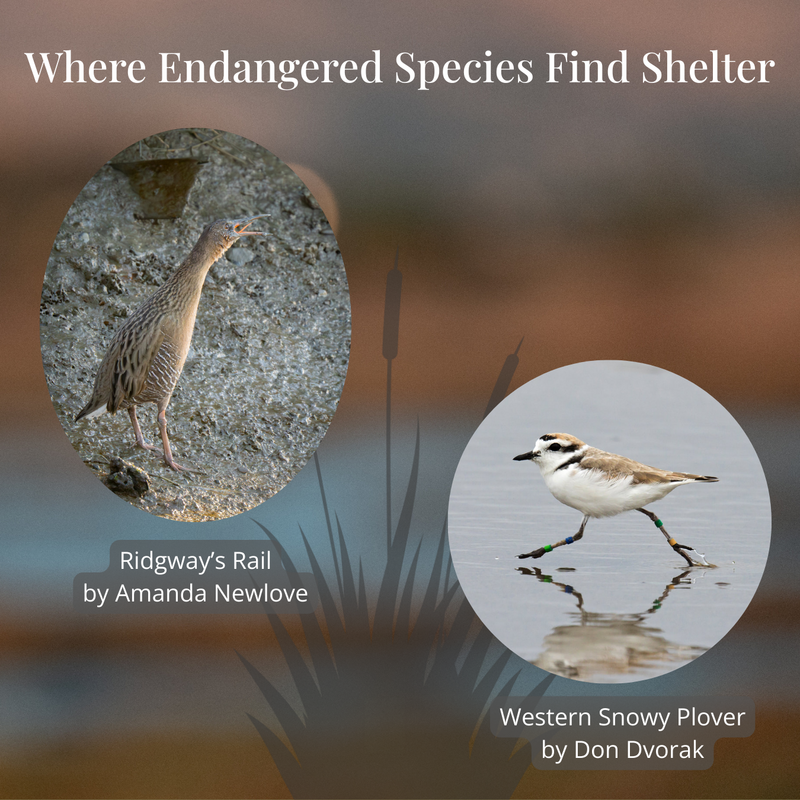
The Bay’s tidal marshes are humming with song and motion — and we’re working to help keep them that way. At Eden Landing Ecological Reserve, SFBBO’s restoration teams and partners are rebuilding habitat that endangered species depend on, including the Ridgway’s Rail, Salt Marsh Harvest Mouse, and Western Snowy Plover.
As part of our ongoing work to connect people with the Bay’s natural landscapes, we’re sharing a series that explores the story of San Francisco Bay’s tidal marshes — their history, science, and the community efforts that keep them thriving.
The marsh’s recovery is unfolding through a combination of science and stewardship, as recent projects show.
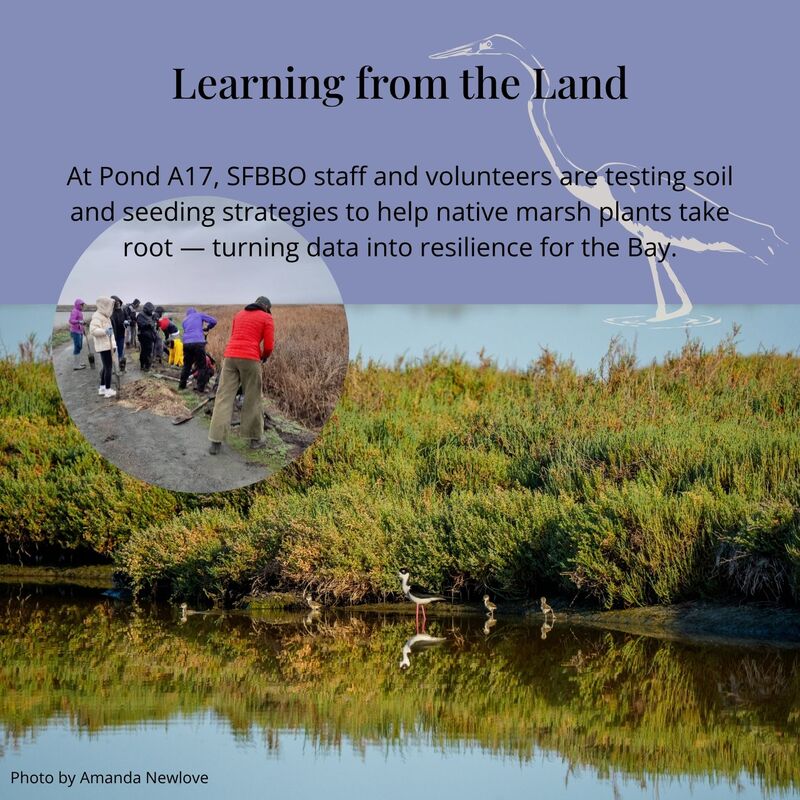
At Pond A17, our team has been studying how different soil treatments and seeding techniques support native marsh vegetation.