Wingbeat Blog

The most recent stories about our science and outreach work

  • The Story of the Marsh: From Seeds to Roots

    By Guest Blogger Jesse Amital
    Picture

    As part of our ongoing work to connect people with the Bay’s natural landscapes, we’re sharing a series that explores the story of San Francisco Bay’s tidal marshes — their history, science, and the community efforts that keep them thriving.

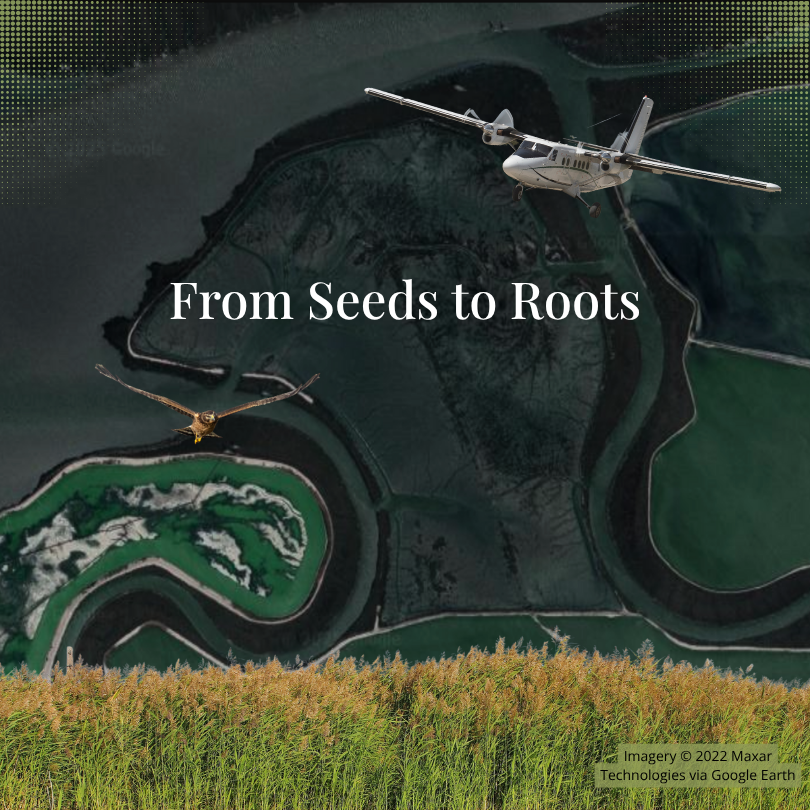
    Our story with the marsh began at Pond A6. In 2010, we helped restore 330 acres of a former salt-production pond to tidal action, reopening the area to the natural ebb and flow of the Bay. We scattered native seeds across the newly restored marsh in an aerial seeding effort that helped jump-start plant growth and stabilize the soil. It worked: today, Pond A6 teems with life, from song sparrows trilling in the reeds to herons and rails hunting along the channels.
    Read More


  • The Story of the Marsh: From Salt to Sanctuary

    By Guest Blogger Jesse Amital
    Picture

    As part of our ongoing work to connect people with the Bay’s natural landscapes, we’re sharing a series that explores the story of San Francisco Bay’s tidal marshes — their history, science, and the community efforts that keep them thriving.

    Once salt flats — now a living marsh.

    For decades, the South Bay Salt Pond Restoration Project has been transforming former industrial salt ponds across the Bay into thriving tidal wetlands. These restorations turn salty, barren landscapes into dynamic ecosystems alive with water, vegetation, and the calls of nesting shorebirds.

    Read More


  • The Story Of The Marsh: The Beginning

    By Guest Blogger Jesse Amital
    Picture

    As part of our ongoing work to connect people with the Bay’s natural landscapes, we’re sharing a series that explores the story of San Francisco Bay’s tidal marshes — their history, science, and the community efforts that keep them thriving.

    Tidal marshes are the beating heart of San Francisco Bay — a Ramsar Wetland of International Importance that supports over a thousand animal species and protects our communities from floods and rising seas.

    Read More


  • Spring Community Outreach for Birds

    By Communications and Marketing Director Kristin Butler
    Picture

    This spring our staff and community outreach volunteers have been busy teaching about conservation science and advocating for birds at our Coyote Creek Field Station and at events in the wider community.

    ​This is part of our mission to engage communities in avian science, habitat restoration, and education. 

    ​We brought science to life at the Wildlife Society’s Earth Month Kickoff and engaged 118 visitors through interactive education about bird migration, sparking curiosity and dialogue about the importance of conservation. 

    Read More


  • From Feathers to Forecasts: SFBBO’s Newest Program Is Leading Climate Change Adaptation Efforts in California

    By Dr. Nathan Van Schmidt
    Picture

    ​Scientists have identified the two biggest threats to biodiversity as land use change (which has driven historical extinctions) and climate change (predicted to drive the greatest future extinctions). As a bird observatory in a major metropolitan area, understanding how the loss of 90% of historical tidal wetlands in the Bay Area has impacted birds has always been a central focus of SFBBO’s research. And many of our programs are studying the impact of climate change on birds—from the  threats facing phalarope habitats under the worsening droughts to impacts on the timing of migration in songbirds. ​

    ​But climate change is bigger than the impact on bird species, affecting both nature and society in myriad ways. The impacts on social systems can in turn alter processes of land use change. For example, a major reason the South Bay Salt Pond Restoration Project is restoring tidal wetlands is not just to create habitats (though this is important!) but also to buffer our human communities against flood risk under sea level rise.

    Read More


  • Bilingual Bird Walk

    By SFBBO Education Program Manager Laura Echavez Montenegro
    Picture

    ¡Estamos en primavera! La perfecta temporada para pajarear en la bahía.

    In early March, we teamed up with Latino Outdoors to co-host a bilingual birding walk at Alviso Marina County Park.

    ​Participants spotted at least 18 species that included a mix of shorebirds, raptors, and songbirds. 

    ​Folks enjoyed a beautiful morning and front row seats to a rambunctious Northern Mockingbird, a mixed kettle of Turkey Vultures and White Pelicans riding thermals, and a Sora foraging within the slough.

    Read More


  • Helping Find a New Home for Herons in Oakland

    By SFBBO Director or Waterbird Science Dr. Nathan Van Schmidt
    Picture

    ​Why do Black-crowned Night Herons love city life? That was the question of one of SFBBO’s recent research efforts. Downtown areas in several cities of the Bay Area, including Oakland and Santa Rosa, have become unexpected homes for Black-crowned Night Herons. These striking birds once nested around Oakland’s Jack London Square and Lake Merritt parks, but tree and shrub trimming there in the past decades have pushed them to form nesting colonies in the trees of the Chinatown neighborhood.

    ​However, this has led to ongoing challenges for both the community and the birds, with their droppings covering sidewalks, businesses, and parked cars, and young herons sometimes falling onto busy streets. Efforts to relocate them back to Lake Merritt have had limited success, raising the question: what makes these urban trees so appealing to the herons?

    Read More


  • Special Snowy Plover Mud Stomp

    By SFBBO Science Director Maddy Schwarz
    Picture

    On March 8 we hosted a very special Snowy Plover Mud Stomp volunteer day at Eden Landing Ecological Reserve in Hayward to install cutting edge Motus technology.

    Motus tags are a type of radio transmitter that send signals to nearby radio antennas. A single Motus station was established at Eden Landing in November 2021 which receives data from any tags on birds and other wildlife and some insects it picks up within 30 kilometers.

    Read More


  • A New Season Starts at our Banding Station at Stanford’s Jasper Ridge

    By Science Director Dr. Katie LaBarbara
    Picture

    On February 24th, 2025, the Landbirds Program opened our banding site at Stanford’s Jasper Ridge ‘Ootchamin ‘Ooyakma for 2025. The JR’O’O site floods each winter and is re-opened each spring, with the goal of restarting banding before the Wilson’s Warblers arrive for breeding. 

    ​SFBBO started bird banding at JR’O’O in 2018 in collaboration with then-undergraduate Julian Tattoni, and students have remained a big part of our presence there: t
    he JR’O’O site is part of our involvement in the Student Opportunities in Avian Research initiative to give undergraduates from local universities and community colleges experience in ornithological field work.

    Read More


  • University Students Explore Tidal Marsh Ecology

    By SFBBO Science Director Eric Lynch
    Picture

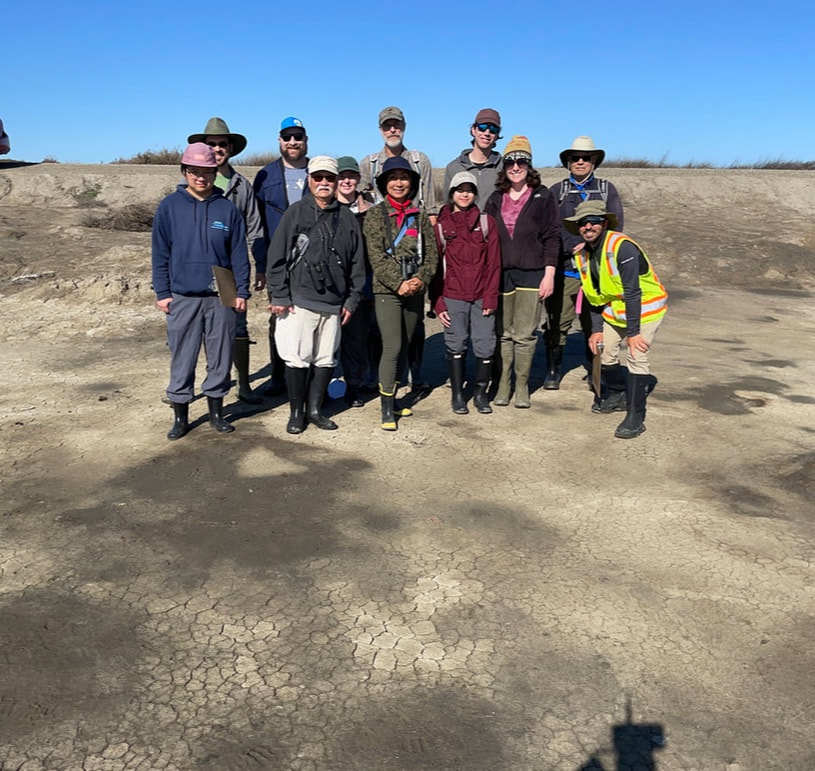
    On February 6th, 2025, SFBBO’s Habitat Conservation team partnered with Keep Coyote Creek Beautiful to host San Jose State University’s Field Studies in Water Resource Management class at our restoration site near Mallard Slough and Pond A16 in Alviso.

    ​The students braved some wet, windy, and muddy conditions while adding 175 native plants to our restoration site. SFBBO staff and the students discussed some of the major conservation issues affecting San Francisco Bay’s tidal marshes. 

    Read More