Wingbeat Blog

The most recent stories about our science and outreach work

  • Falconer Gained Shorebird ID Skills Thanks to Workshop Scholarship

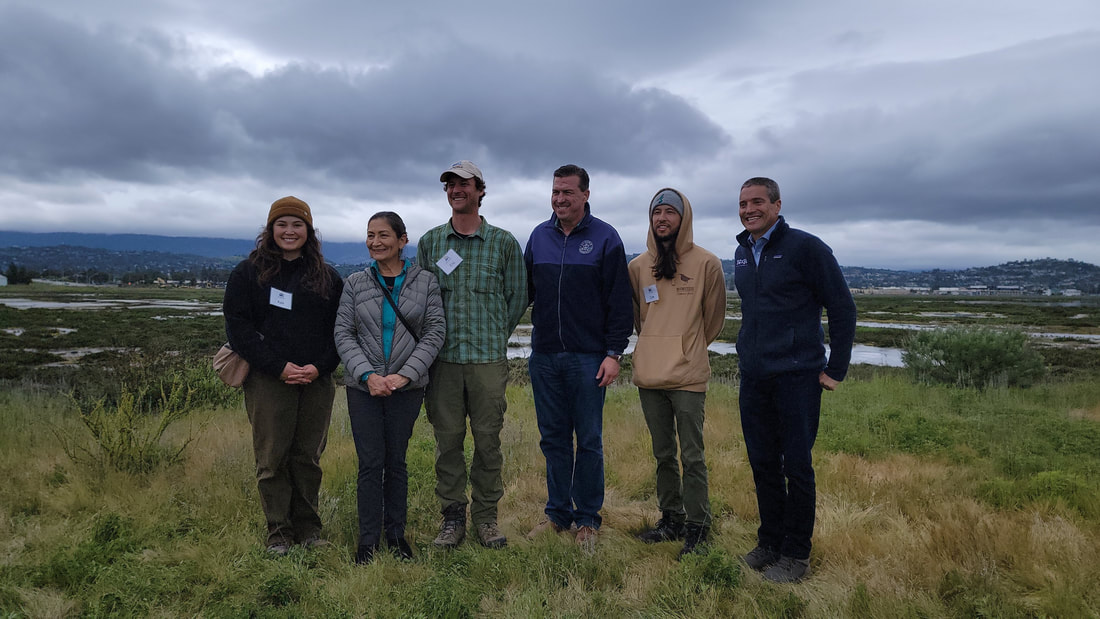
    By Guest Blogger Grace Chung
    Picture

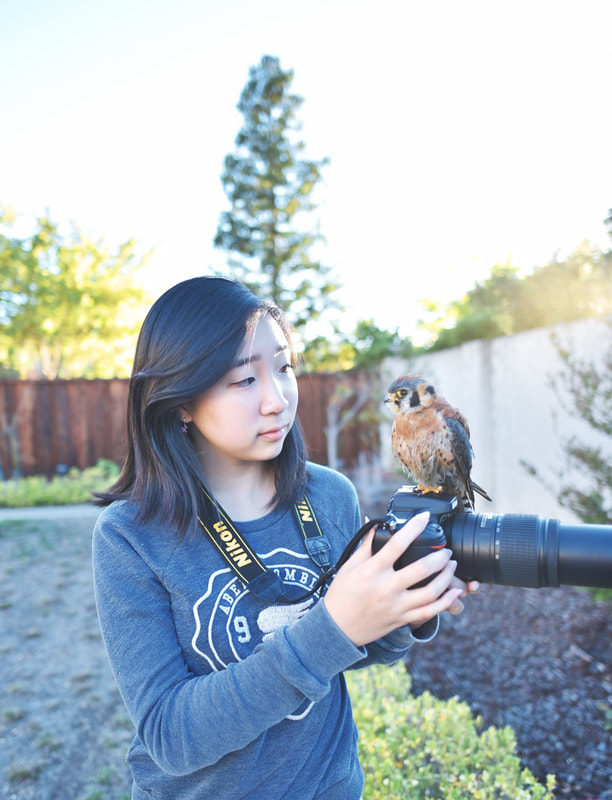
    As a falconer, I’ve always loved and admired birds of prey. Observing, photographing, and identifying wild raptors is one of my favorite pastimes. Even just this summer, my family and I spent many weekends driving up to Pacifica to watch the Peregrine Falcons fledge and feed. 

    But peregrines are rarely the only birds that we spot upon approaching the shoreline. In fact, we often saw hundreds or thousands of shorebirds scattered in flocks across the area. Even with my binoculars, however, I could hardly tell the different species apart. My shorebird ID skills were clearly quite lacking.

    ​When my school’s local ecological society told us about this opportunity to learn about native shorebirds from the San Francisco Bay Bird Observatory, I was thrilled. 
    Read More


  • Dudley Carlson’s Kids Bird Book Recommendation – Teach Our Children Well

    By Guest Blogger Dudley Carlson
    Picture

    ​This is a blog about birds in books for children; but these are no ordinary times. Some readers may remember the film “South Pacific” and the song that goes,
               
    …You’ve got to be taught /To be afraid
    Of people whose eyes/Are oddly made
    And people whose skin/Is a different shade…
     
    The recent encounter between noted birder Christian Cooper, a member of the New York City Audubon Society board of directors and an African American, and a white woman who accused him of threatening her reminds us …

    Read More


  • Science Teacher Connects Students to Israel’s Birds

    By Guest Blogger Wendy Gibbons
    Picture

    As a Bay Area science teacher, I love finding ways to connect my students’ learning to the natural world around them. I recently had the opportunity to do just that while chaperoning the junior class from Kehillah Jewish High School on an experiential learning program for 3 weeks in Israel. Did I bring binoculars in my tightly packed suitcase? You bet! I even lugged a second pair just in case a student or two wanted to take a closer look at a winged marvel. What follows is a brief summary of some adolescent as well as avian highlights from the trip. 

    Our adventure began in Southern Israel at the Negev Desert, where we were rewarded with views of Pale Crag Martins, Fan-tailed Ravens, …

    Read More


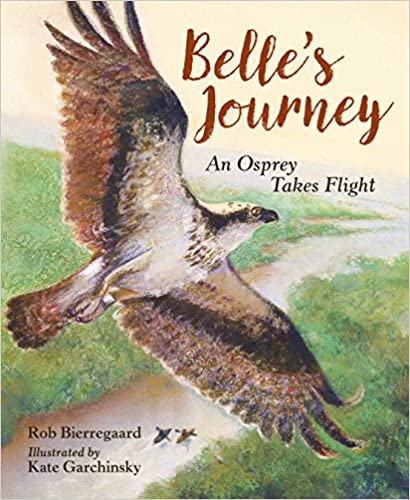
  • Dudley Carlson’s Kids Bird Book Recommendation – Belle’s Journey: An Osprey Takes Flight

    By Guest Blogger Dudley Carlson
    Picture

    ​The season of returning migrants is a good time to look at one up close; and while we’re all sheltering in place, an adventure with a young osprey is a great place to start. In his book “Belle’s Journey: An Osprey Takes Flight,” ornithologist Bierregaard’s introduction calls attention to the curiosity that sparks scientific inquiry and the kinds of questions that have led scientists to develop new means of tracking long-distance migrants.

    ​On Martha’s Vineyard a young osprey is born. In the same area, a boy and girl walking on the ​beach encounter a scientist and his partner who are …

    Read More


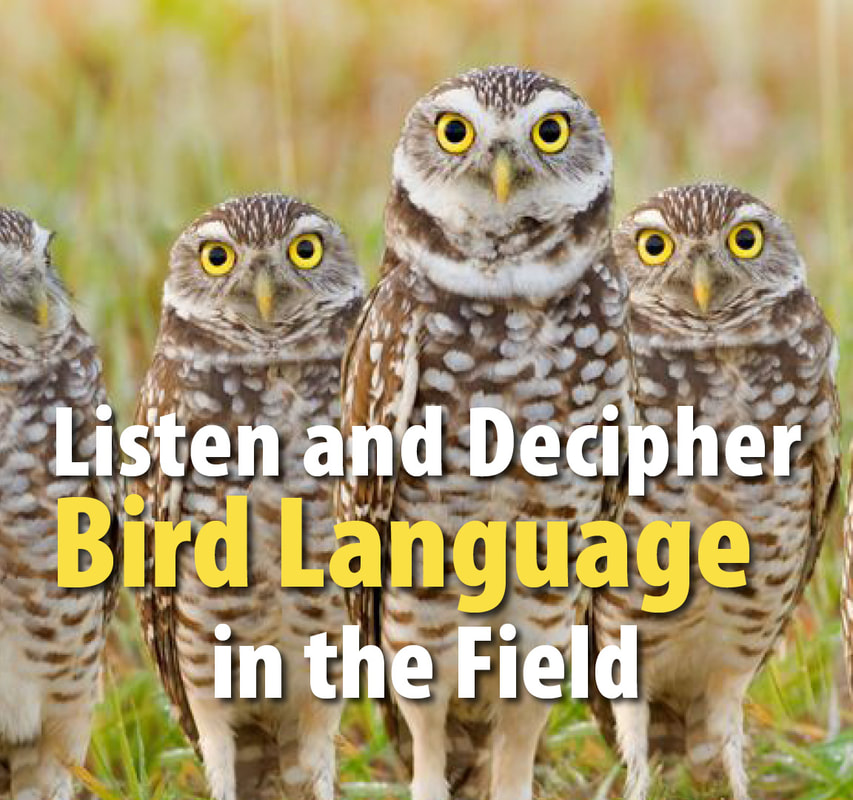
  • Learn What Birds Are Saying at a Bird Language Workshop March 14

    By Guest Blogger Jeff Caplan
    Picture

    ​I’m just back from teaching bird language in the tropical jungles of Ecuador and the Galapagos. You know what? The same sounds that birds here in California have taught us to listen for also work to understand bird language on the Equator and in the Amazon.
     
    For example, listening to the rather friendly Galapagos Flycatcher, you can understand who’s looking for a mate and who’s just making casual conversation in the same way you can understand flycatchers here in the United States. You may not be able to speak Spanish when you head south, but you can learn …

    Read More


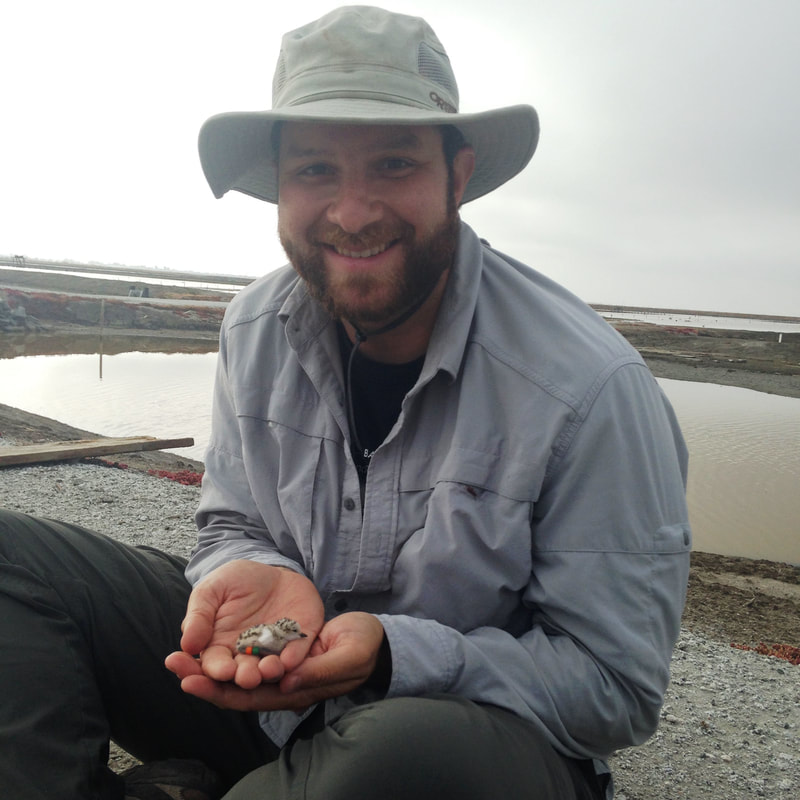
  • Intern Contributes to Bay Area Waterbird Research

    By Waterbird Intern Sarah Cantwell
    Picture

    My experience at SFBBO for the last five months has been one I will never forget. It was my first time in California and my first time working with birds along the Pacific Flyaway. I’ve thoroughly enjoyed counting birds with SFBBO and getting the chance to experience seeing the sheer abundance of birds in the area.

    ​As a Waterbird Intern, I’ve accomplished many tasks to benefit other staff at SFBBO, volunteers, and future waterbird interns. Along with monitoring waterbird use in the South Bay’s salt ponds, I designed a new system for monitoring historic colonial waterbird nesting sites, contributed to the annual salt pond report, and participated in the annual shorebird survey. Most recently, I’ve worked on a project to help answer the question “How can island design help promote breeding colonies of declining waterbirds, …

    Read More


  • Intern Makes an Impact for Waterbirds and Joins Plover Team

    By Plover Intern Parker Kaye
    Picture

    I’m very grateful to have spent the last six months as a part of SFBBO’s Waterbird Team. Prior to joining SFBBO, I had no experience working with birds and am amazed by how much I have learned in what seems like such a short amount of time. The majority of my time has been spent conducting salt pond surveys and learning the waterbirds of the Bay Area, but I have also had the opportunity to develop other skills that will help me as I move forward with my career. I helped generate maps and graphs …

    Read More


  • The Latest on Least Terns

    By Plover and Tern Program Director Ben Pearl
    Picture

    ​California Least Terns were once abundant along the Pacific Coast from Monterey Bay to the tip of Baja California. But once people began to flock to the California coast in the late 1800’s, their population began a steep decline.As colonial ground nesting seabirds, Least Terns are highly vulnerable for a number of reasons. Their primary breeding habitat, coastal sand dunes, have been largely developed, and those that have not often host large numbers of beachgoers. Least Terns are very sensitive to human disturbance, and thus few suitable breeding sites remain. Where they do still breed, they face high levels of egg and chick predation, especially from predators such as corvids, gulls, …

    Read More


  • An Update on Snowy Plovers

    By Plover and Tern Program Director Ben Pearl
    Picture

    ​SFBBO has been intensively monitoring Snowy Plovers in the South Bay since 2003, when the U.S. Fish and Wildlife Service and CA Department of Fish and Wildlife acquired large tracts of former salt production ponds and began managing them for wildlife. During that time, the South Bay Snowy Plover population has significantly increased, in large part due to management actions designed specifically to provide them with quality breeding habitat. However, Snowy Plover populations still face many challenges to recovery, especially predation from a diverse group of species, including corvids, gulls, raptors, and mammals. Since 2018, SFBBO has attempted to improve …

    Read More


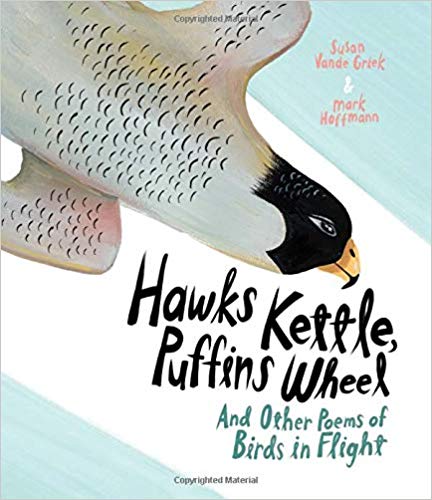
  • Dudley Carlson’s Kids Book Recommendation: Hawks Kettle, Puffins Wheel, and Other Poems of Birds in Flight

    By Guest Blogger Dudley Carlson
    Picture

    Those of us who read to or with children tend to be word people as well as bird people. A recent picture book from Canada recalls “An Exaltation of Larks” as it presents a dozen bird species and the group names associated with their flight styles. In Hawks Kettle, Puffins Wheel, And Other Poems of Birds in Flight, Susan Vande Griek offers brief, free-verse poems about each bird, followed by a short statement about its style of behavior when flying, fishing, diving, or protecting itself. Crows, for example, “mob” intruders or threats; Bald Eagles “cartwheel” during their courting flight; Northern Gannets “plunge-dive” when fishing. Mark Hoffman’s large, boldly stylized illustrations add visual impact to the descriptions and extend the book’s reach to young listeners. This is a book likely to spark …

    Read More